"Either way, the Town of Brookhaven will get its hockey rink."
Supervisor Dan Panico said that at the March 26, 2026 Town Board meeting, after Brookhaven approved a 600,000-square-foot logistics campus on the old Dowling College aviation site in Shirley. The line was a warning to the developer, Hampshire Venture Partners, that if the promised recreation center never gets built, the town will bond it and build it anyway. Warehouses first, hockey rink guaranteed either way. That single condition tells you more about where Shirley is headed than any listing sheet will.
If you have been comparing Shirley's median sale price against Bellport or Hampton Bays and wondering why the gap exists, the zoning file from that March vote is a better place to look than the comps.
A Corridor Doing Two Jobs at Once
William Floyd Parkway is the spine of Shirley, and it has been doing double duty for a while. A Flushing Bank branch opened at 1044 William Floyd Parkway years back, the first Flushing Bank location in Suffolk County. Brookhaven's own highway department has cited "an inordinate amount of traffic just from the Amazon trucks coming in and out of that facility alone" when explaining why it repaved Precision Drive and Ramsey Road near the corridor's existing industrial park, per the town's paving announcement.
None of this reads like a sleepy residential side street. It reads like a corridor that is simultaneously banking, warehousing, and now, adding recreation.
The Trade the Town Board Made
The March vote covered the 105-acre former Dowling College aviation campus next to Calabro Airport. Hampshire Venture Partners got approval to build three warehouse buildings up to 55 feet tall, renovate the site's existing 53,000-square-foot hangar, and add a 2,400-square-foot sewage treatment plant, according to reporting from Fire Island News. In exchange, the developer agreed to keep the site's existing 23-acre ball fields, preserve 21 wooded acres as parkland, and fund what would become Brookhaven's first town-owned ice hockey rink at 81,000 square feet.
The town structured this as leverage, not a gift. Certificates of occupancy for the final construction stage will be withheld until the rink is finished. If Hampshire backs out, Brookhaven has said it will use bonds to build the rink on its own, according to the Long Island Parks account of the approval. Truck routes for the site are directed onto William Floyd Parkway rather than the surrounding residential streets, and a full-length buffer separates the industrial parcel from nearby homes.
Read plainly, the town board treated this parcel as an employment and logistics asset first, and negotiated a community amenity as the cost of doing that. That is a different posture than negotiating a subdivision plan for houses. It tells you what kind of growth Brookhaven expects this stretch of Shirley to produce over the next decade, and it is not primarily residential rooftops.
What the Numbers Say Right Now
Multiple public trackers put Shirley's median sale price in a fairly tight band through the middle of 2026, though the exact figure moves depending on the window you check.
| Window measured | Median price | Days on market |
|---|---|---|
| Three months ending May 2026 | $546,000 | 42 |
| August 2026 | $530,000 | 27 |
| September 2026 (list price) | $542,000 | 56 |
The spread itself is a small clue. A market that is simultaneously reported as fast (27 days) and slower (56 days) within the same few months usually means the underlying pool of homes is mixed, some moving on pure price appeal, others sitting because they carry a location cost buyers are pricing in more carefully than they used to. Given what is happening a few blocks off William Floyd Parkway, that second read fits.
Shirley's median has climbed roughly 4 to 7 percent year over year across these same sources, which keeps pace with much of the South Shore. What it has not done is close the gap with hamlets like Bellport or Hampton Bays that sit closer to open water and further from industrial zoning. That gap is not a mystery to solve. It is priced information about proximity.
Why the Discount Isn't Free
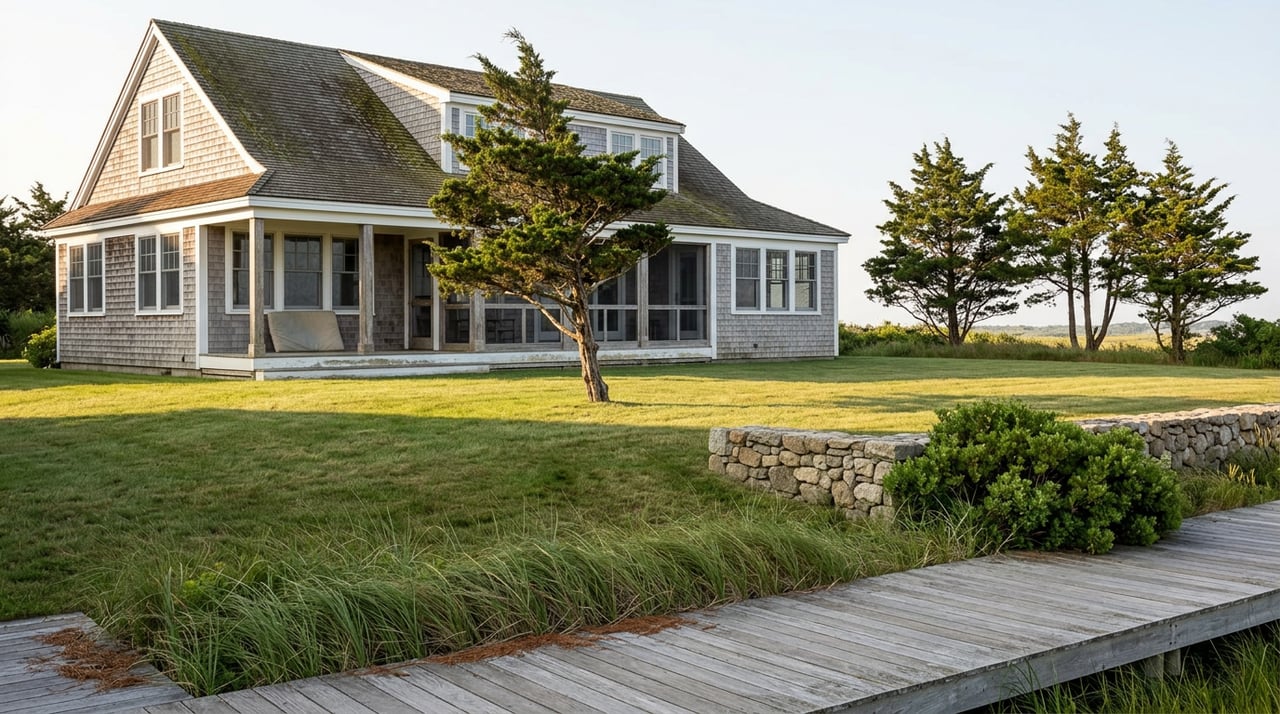
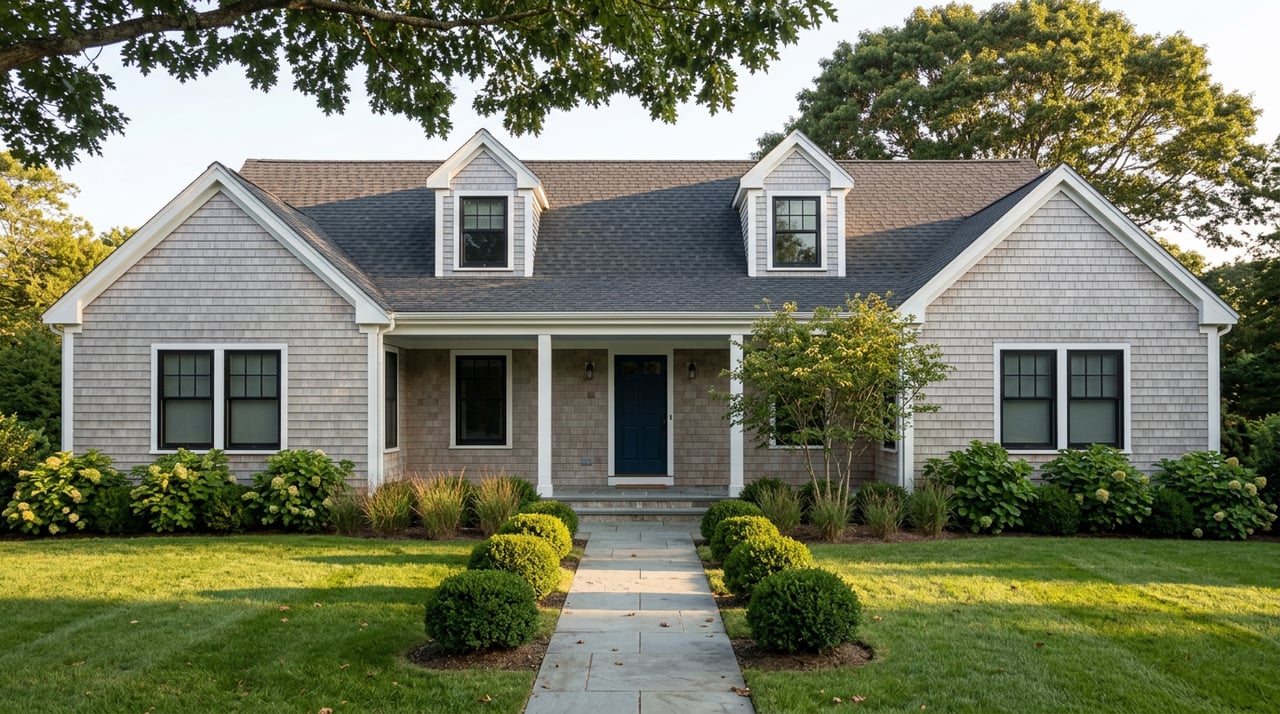
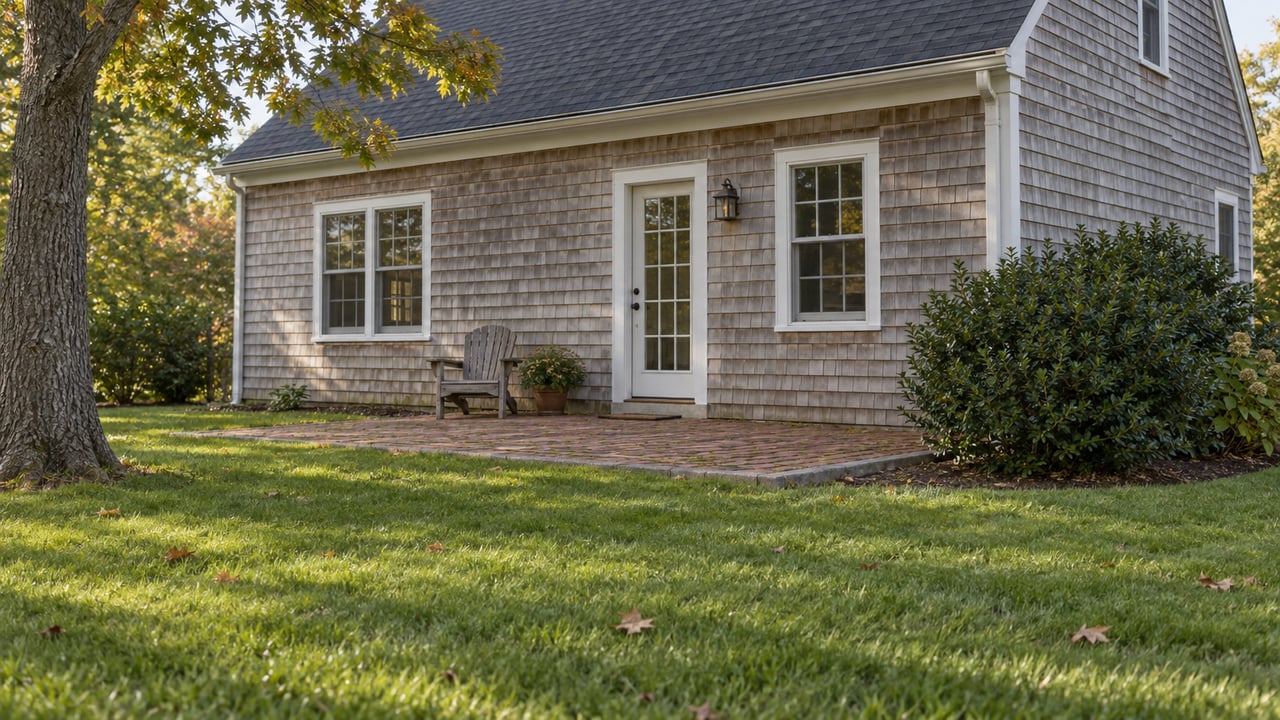
Some of Shirley's price floor is simply architectural history. Developer Walter T. Shirley built roughly 4,000 four-room homes here in the 1940s, starting at $4,700 with lots going for $295, and that postwar tract housing still makes up much of what is on the market street to street. Before the Shirley name took hold, the area was known as Tangiers, tied to William "Tangier" Smith, and a scatter of early-1900s summer bungalows from that era still stand alongside the mid-century houses. Smaller footprints and older systems on a meaningful share of the housing stock explain part of why the entry price sits below neighboring hamlets.
But housing stock alone does not explain a widening gap in a market where prices are still rising. The corridor's expanding industrial footprint does. A 600,000-square-foot logistics campus does not sit quietly next to a neighborhood. It adds shift-pattern traffic, truck volume, and a permanent employment base that changes what kind of buyer is comparing Shirley to its neighbors. Some of those buyers want exactly that proximity to work. Others are trading it for the lower price point and deciding the tradeoff is worth it. Either way, it is a real line item in what the discount buys, even when it never appears on a closing statement.
The Other Half of the Math
There is a smaller, quieter piece of this that cuts the other direction. Shirley Beach, at 19 Grandview Drive, is a Town of Brookhaven facility, open to residents without a membership fee or a homeowners association buy-in, per the town's own facility listing. That is a different funding model than the private beach club structure found in several other Long Island shoreline communities, where associations like the Sheridan Beach Community Club or the Sound Beach Property Owners Association charge annual dues, initiation buy-ins, and in some cases required volunteer hours just to reach the water. A private club membership on Long Island's shoreline commonly runs several hundred dollars a year at minimum, sometimes more for pool access or non-deeded households, and that carrying cost sits on top of the mortgage.
Shirley's public beach model means that particular cost line simply does not exist here. When you weigh what a lower median price buys against a pricier neighboring hamlet, it is worth remembering that some of what looks like a savings in Shirley is a savings other places charge for through a private membership structure, and some of what looks like a discount is the price of sitting closer to an expanding logistics corridor. Both are real. They are just not the same kind of tradeoff, and a buyer comparing towns on price alone will miss the distinction entirely.
If you are weighing Shirley against another South Shore hamlet on more than price per square foot, our Suffolk County neighborhood guide walks through more of these town-by-town differences, and a current home valuation can show you where a specific address in Shirley actually sits against that spread.
The rink will get built one way or another. What matters for anyone comparing this corridor to the rest of the South Shore is that the town already told you, in the language of a zoning condition, which use it expects this stretch of Shirley to serve first.
If you are trying to figure out what a specific price gap in Shirley actually means for your own search, Marina Putova is happy to walk through it street by street. Let's Connect.